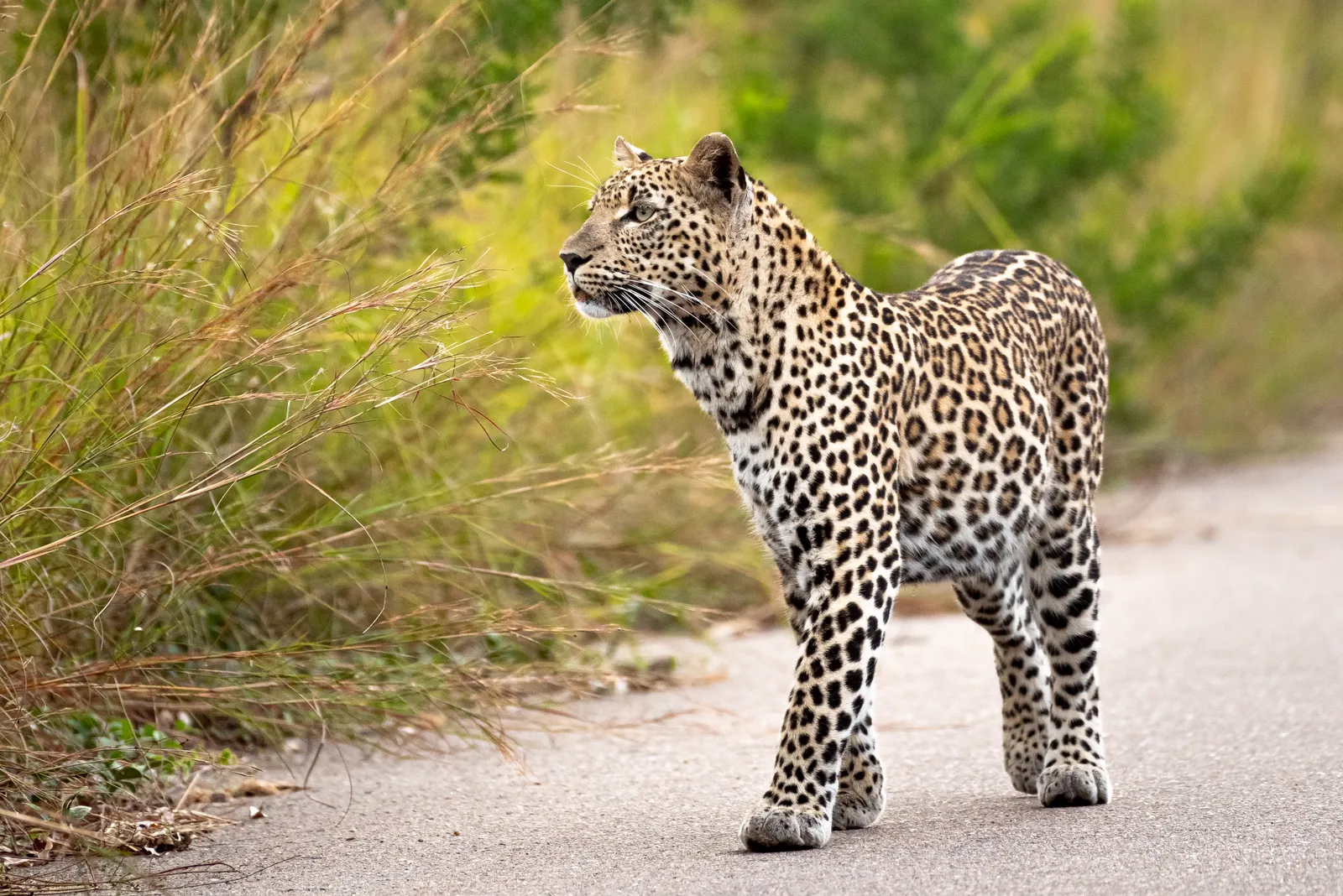
Spotting Leopards: The Ultimate Guide
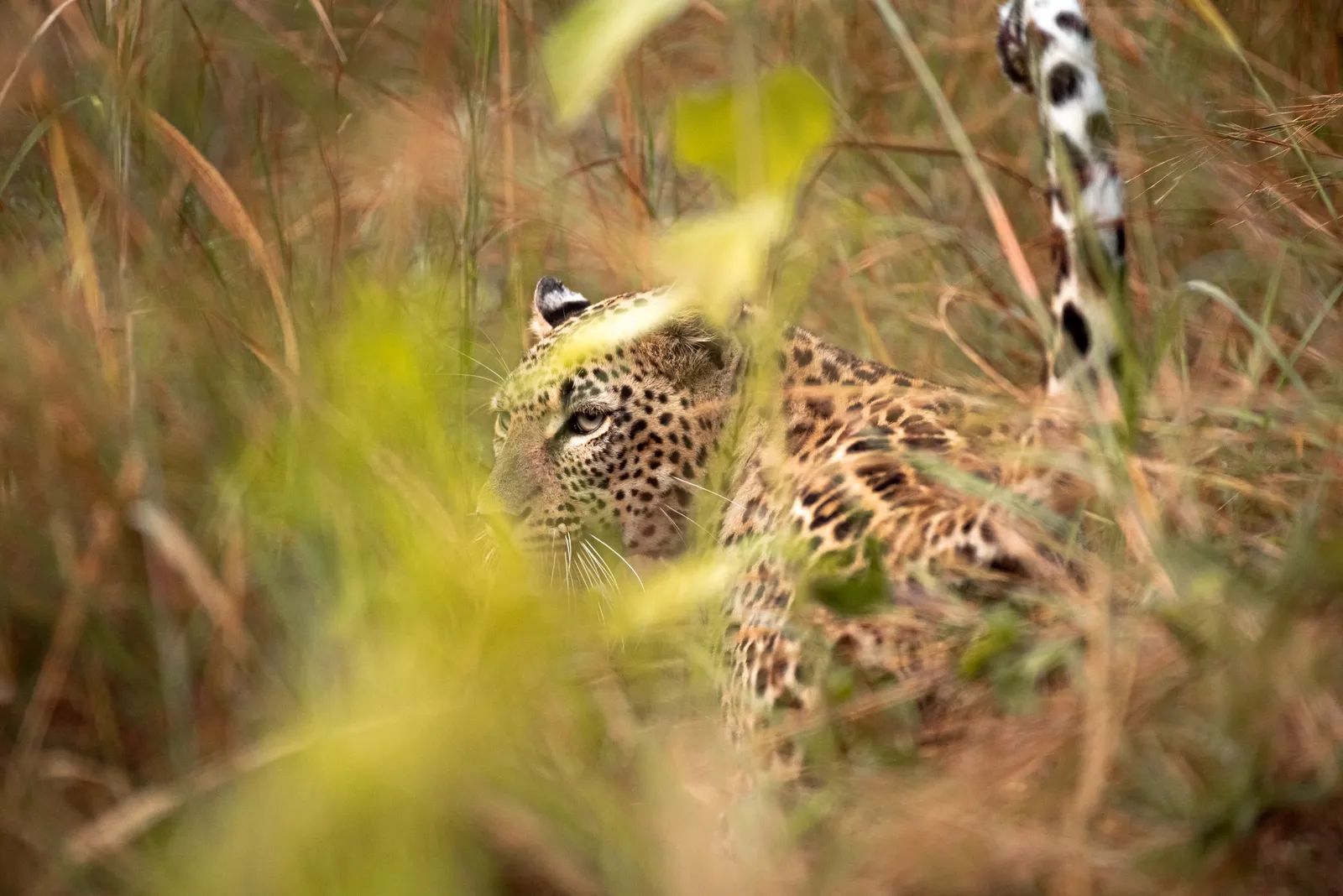
The leopard is arguably the most elusive and sought-after of the Big Five in Kruger National Park. While lions are often seen resting in the open, leopards are solitary, secretive, and masters of camouflage.
Look Up, Not Just Down
Leopards are excellent climbers. During the heat of the day, their preferred resting spots are the sturdy, horizontal branches of large trees, particularly Marula, Jackalberry, and Sausage trees.
When you scan the bush:
- Don't just look at the undergrowth.
- Scan the lower to mid-canopy of large trees along riverbeds.
- Look for a tail hanging down – this is often the easiest giveaway!
The Importance of Riparian Zones
Leopards love dense, riverine vegetation. The Sabie, Sand, and Shingwedzi rivers are prime habitats. Look for areas with a high density of Impala (their primary prey) and thick cover.
Dawn and Dusk
Like most predators, leopards are crepuscular. They are most active during the cooler hours of dawn and dusk. Night drives offer an excellent opportunity to spot them hunting.
Alarm Calls
Nature has its own alert system. Learn to recognize the alarm calls of:
- Vervet Monkeys: A series of sharp "chuttering" sounds.
- Baboons: A loud, barking "Wahoo!".
- Impala: Sneezing or snorting sounds.
- Tree Squirrels: High-pitched, continuous chattering.
If you hear these sounds continuously from a specific direction, stop, turn off your engine, and watch the tree lines carefully. Something is moving through the bush.