The Small 5: Kruger's Tiny Wonders
When the phrase "safari" is mentioned, the mind immediately jumps to images of roaring lions, massive elephants shaking the earth, and rhinos grazing peacefully on the savanna. These are the giants of the bush—the famous "Big 5." But if you spend all your time looking up into the trees for leopards or scanning the distant horizons for buffalo herds, you will miss out on an equally fascinating, completely different world taking place right under your tires.
Say hello to the "Small 5."
Just like the "Ugly 5," this list was cleverly created by safari guides and conservationists. But the goal here was far more specific: to encourage visitors to look down. The Small 5 were chosen simply because their names mirror or incorporate the names of the famous Big 5. Spotting all of them on a single safari is an incredibly difficult task that requires immense patience, a sharp eye, and often, stepping out of your vehicle in a rest camp to comb the ground.
In this comprehensive deep-dive guide, we explore the biology, bizarre habits, and incredible survival strategies of the Elephant Shrew, the Ant Lion, the Leopard Tortoise, the Rhino Beetle, and the Buffalo Weaver.
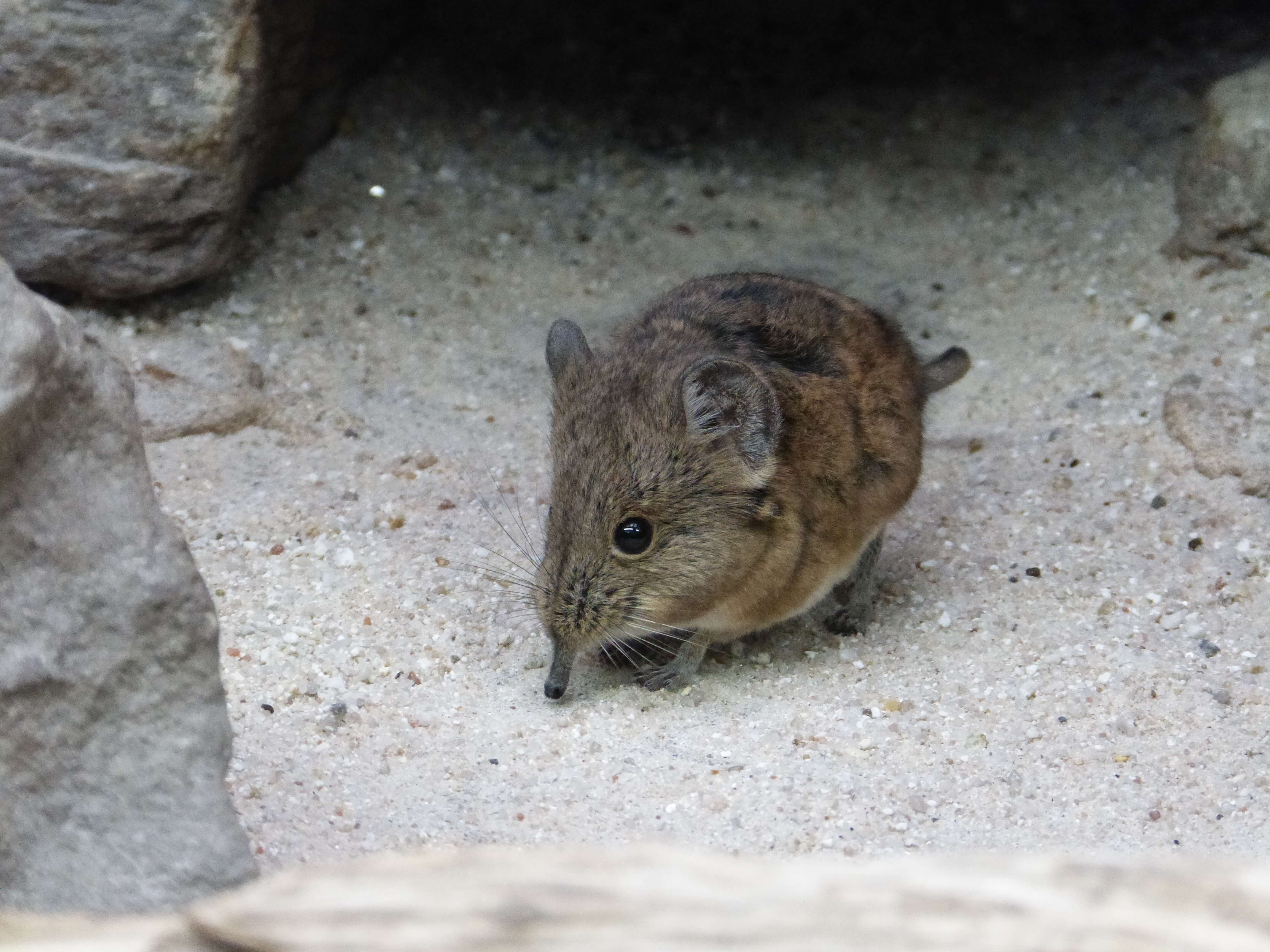
1. The Elephant Shrew (Macroscelididae)
The hyper-active, trunk-nosed speedster of the undergrowth.
The Elephant Shrew gets its name from its incredibly distinct, elongated, mobile snout, which bears a striking resemblance to a miniature elephant's trunk. For decades, scientists believed they were related to true shrews or hedgehogs due to their size and shape. However, modern genetic testing revealed a mind-blowing fact: they belong to a biological super-cohort called Afrotheria. This means that, biologically speaking, the tiny Elephant Shrew is actually more closely related to true Elephants, Aardvarks, and Manatees than it is to the common shrew found in your garden!
These tiny creatures are incredibly fast, hyper-active insectivores. They spend their days violently twitching their sensitive "trunks" to sniff out ants, termites, beetles, and earthworms hidden in the leaf litter. Once they find a meal, their long tongues dart out to snatch it up.
They are famously nervous and highly territorial. To survive attacks from snakes, raptors, and small carnivores, elephant shrews spend huge amounts of time maintaining a complex network of cleared "high-speed pathways" through the brush. If a predator attacks, the shrew relies entirely on this memorized race track, sprinting at relative speeds that defy logic, taking massive, bounding leaps to escape.
Best Places to Find Them in Kruger: Spotting an elephant shrew from a moving vehicle is almost impossible; they look like a blurry brown streak darting across the road.
- The best way to see them is on foot inside the rest camps.
- Look in areas with thick, undisturbed leaf litter and rocky outcrops. Berg-en-Dal and Pretoriuskop camps are excellent places. Sit quietly on your patio early in the morning, and you may see one twitching its nose investigating the edges of the gardens.
2. The Ant Lion (Myrmeleontidae)

The brilliant architect of the sandy death trap.
The Ant Lion is perhaps the most bizarre and sinister member of the Small 5. The name "Ant Lion" actually refers to the larval stage of a flying insect that looks somewhat similar to a fragile dragonfly or damselfly. The adult stage is nocturnal, short-lived, and rarely seen by tourists. It is the predatory, ground-dwelling larva that earns the name "lion."
The ant lion larva is a grotesque, fat-bodied insect armed with a pair of massive, hollow, sickle-shaped jaws. Because it is slow-moving and completely ungainly, it cannot chase prey. Instead, it is a master architect. The larva burrows backward into loose, dry sand in a perfect spiral, flicking sand grains out with its head until it has created a perfectly conical depression—the "pit of doom."
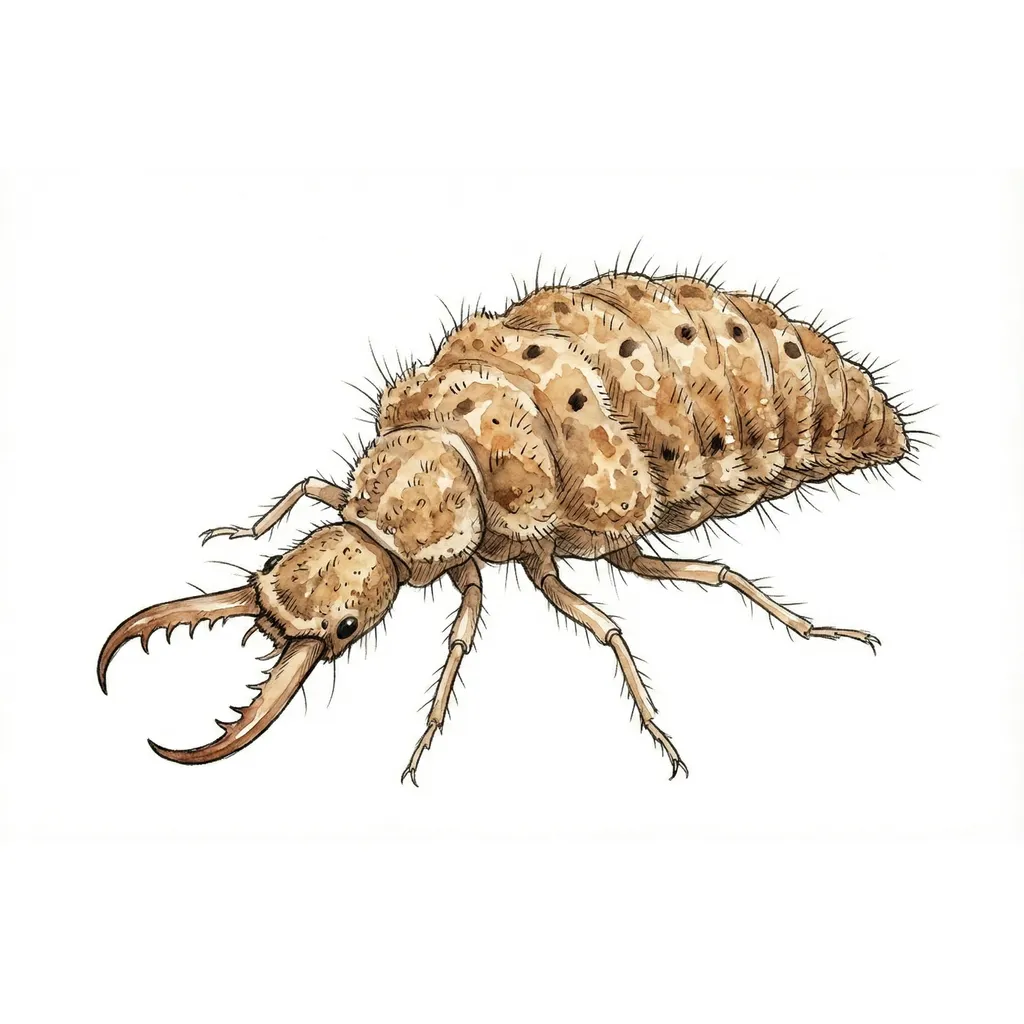
The insect then buries itself at the exact bottom of the pit, with only its huge jaws exposed, waiting in ambush. When a hapless ant or small spider wanders over the edge of the pit, the loose sand crumbles, causing the prey to slide downward. If the ant tries to scramble back up, the ant lion violently flicks loose sand up at it, causing an avalanche that drags the victim right into the waiting jaws. The jaws inject a paralyzing venom and digestive enzymes, dissolving the ant's insides so the ant lion can suck them out, later flicking the empty husk out of the pit.
Best Places to Find Them in Kruger: You do not leave your car to find an ant lion; you find them while walking around the camps or picnic sites.
- Look directly beneath the wide, overhanging eaves of the thatched roofs of your bungalow or the ablution blocks.
- The sand here is kept perfectly dry (even during heavy summer rains), which is essential for the traps to work.
- You will see dozens of perfect, tiny conical divots in the sand, about the size of a golf ball.
3. The Buffalo Weaver (Bubalornis niger)
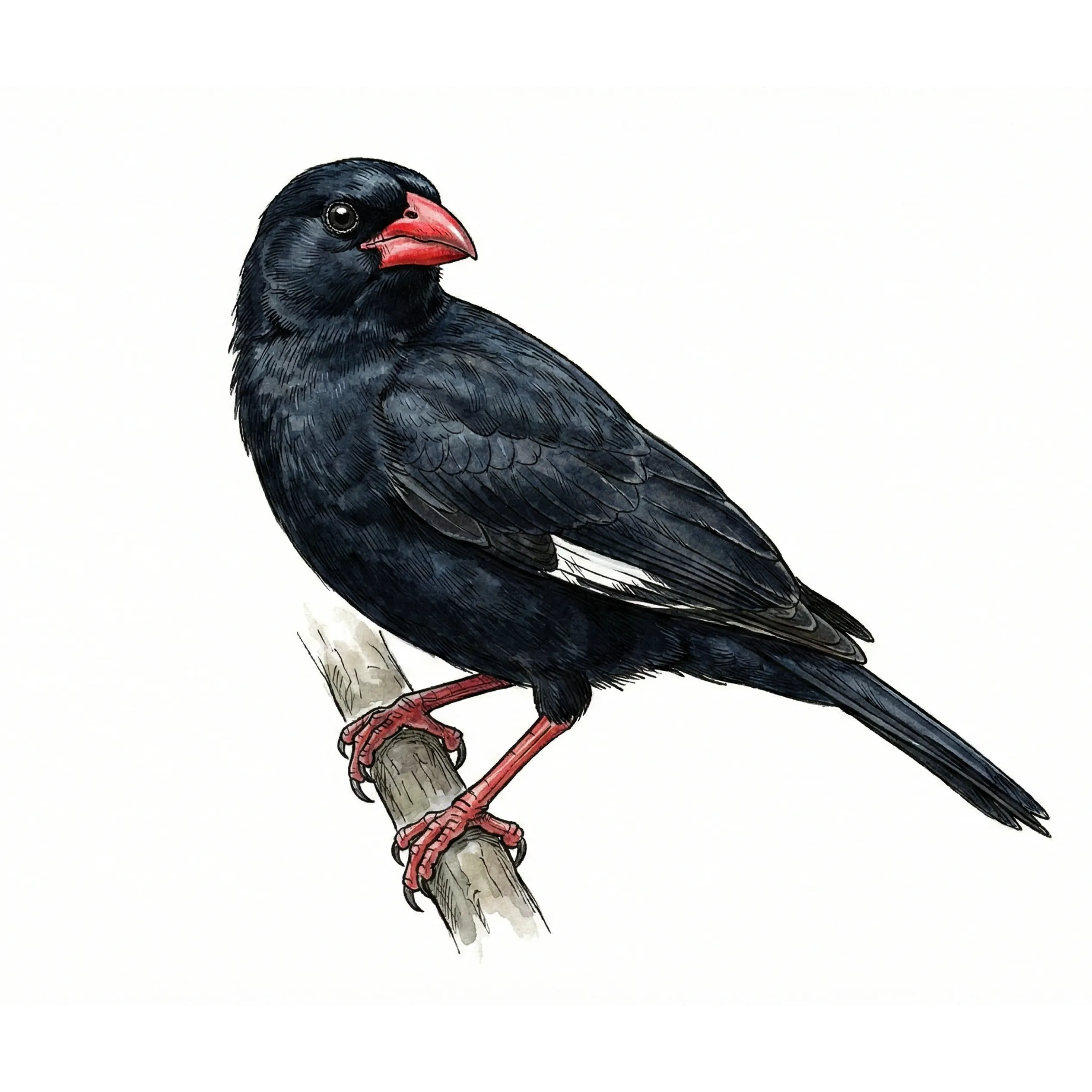
The noisy, chaotic architect of the bushveld.
As its name suggests, the Red-billed Buffalo Weaver represents the mighty Cape Buffalo in our miniature list. It is a large, bulky, heavy-set bird with stark black plumage crossed by white patches on the wings (more visible in flight) and, crucially, a vividly bright red bill.
While the Cape Buffalo is famous for its defensive aggression, the Buffalo Weaver is famous for its architectural chaos and absolutely deafening social life. Most birds build neat, deeply woven, recognizable nests. The Buffalo Weaver, in stark contrast, looks like it simply threw a massive pile of thorny twigs into a tree and hoped for the best.
These birds are highly gregarious and colonial. Rather than building individual, isolated nests, several males will work together to build sprawling, multi-chambered "apartment complexes" in the high branches of large trees, creating massive structures of thorny, interlocking sticks. Multiple females will then take up residence in the inner chambers, laying their eggs securely protected by the impenetrable wall of thorns. The colonies are intensely noisy, filled with a constant stream of harsh, crackling chatter, squawks, and aggressive displays as males vie for mating dominance.
Best Places to Find Them in Kruger: These birds are extremely common and very hard to miss due to the sheer size of their nests.
- Look in the Central and Northern regions of Kruger, particularly around Satara, Orpen, and Letaba.
- They heavily favor massive, dead trees, Baobabs, or Marula trees for their colonies. You will often spot a dead tree from miles away completely weighed down by these colossal, messy twig structures, with the birds swarming around them.
4. The Leopard Tortoise (Stigmochelys pardalis)
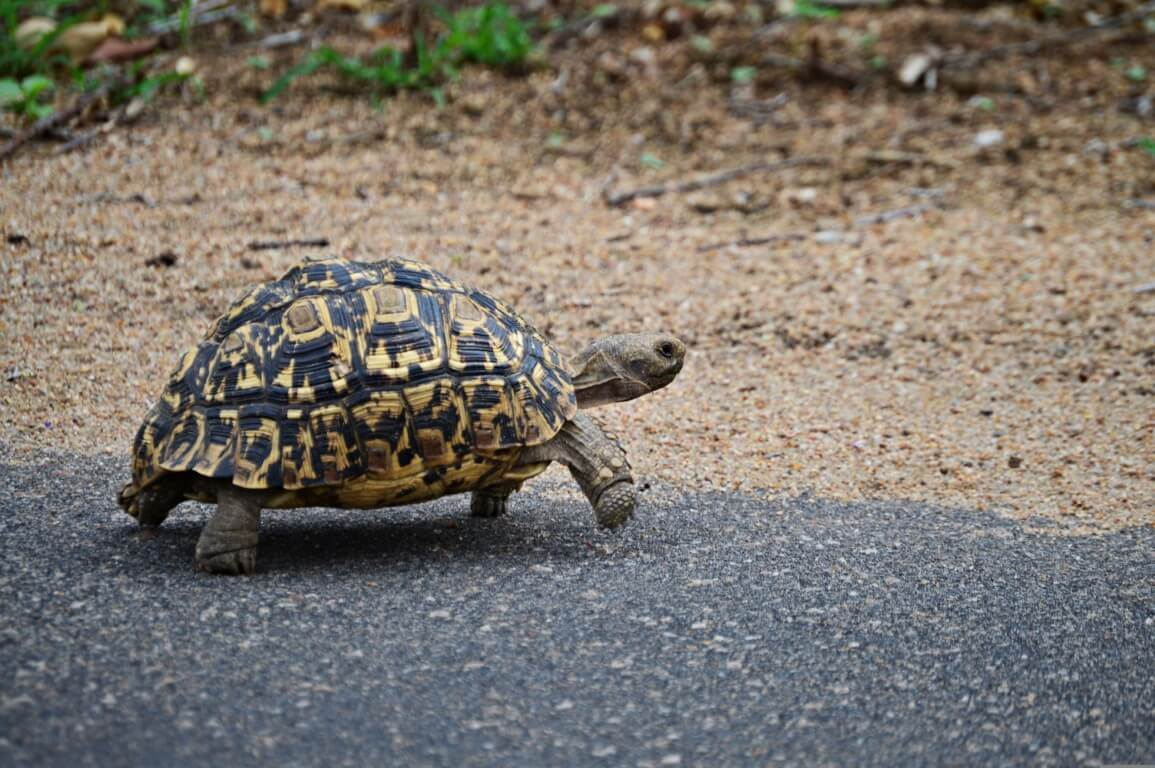
The beautifully patterned, ancient nomad.
The Leopard Tortoise gets its name from the stunning, rosette-like markings on its highly domed carapace (shell), which perfectly mimic the spotted coat of a leopard. This striking pattern is not just for show; it serves as brilliant camouflage when the tortoise is resting in the dappled shade of thorny bushes and dry grass.
This is not a small animal by any stretch—it is the fourth-largest species of tortoise in the world, with large adults capable of weighing well over 20 kilograms (44 lbs) and living for 80 to 100 years. They are exclusively herbivorous, wandering slowly through the savanna grazing on grass, succulents, and fallen fruits.
One of their most remarkable physical traits is their resilience. Like all tortoises, when threatened, they will suck their head, heavily scaled legs, and tail tightly into their shell, expelling air from their lungs with a loud, aggressive hiss to make room. Because their shell is so tough and highly domed, they are incredibly difficult for most predators to crack. However, they face immense threats from bushfires, honey badgers, and, tragically, speeding vehicles on Kruger's roads.
During the hot summer months, female Leopard Tortoises will dig a deep hole using their hind legs and lay a dozen or more perfectly round, white eggs. Once buried, the mother abandons them. The temperature of the sand determines the sex of the babies; warmer sand tends to produce females, while cooler sand produces males.
Best Places to Find Them in Kruger: Leopard tortoises are fairly common, especially after a heavy rain shower when they emerge to drink water drinking from puddles on the tar roads.
- They are frequently seen walking very slowly across the H1 series of tar roads throughout the length of the park.
- Please drive slowly, especially after summer rains, as they blend in perfectly with the dark asphalt and are frequently the victims of roadkill. If you see one crossing, simply stop and enjoy observing this ancient creature.
5. The Rhino Beetle (Dynastinae)
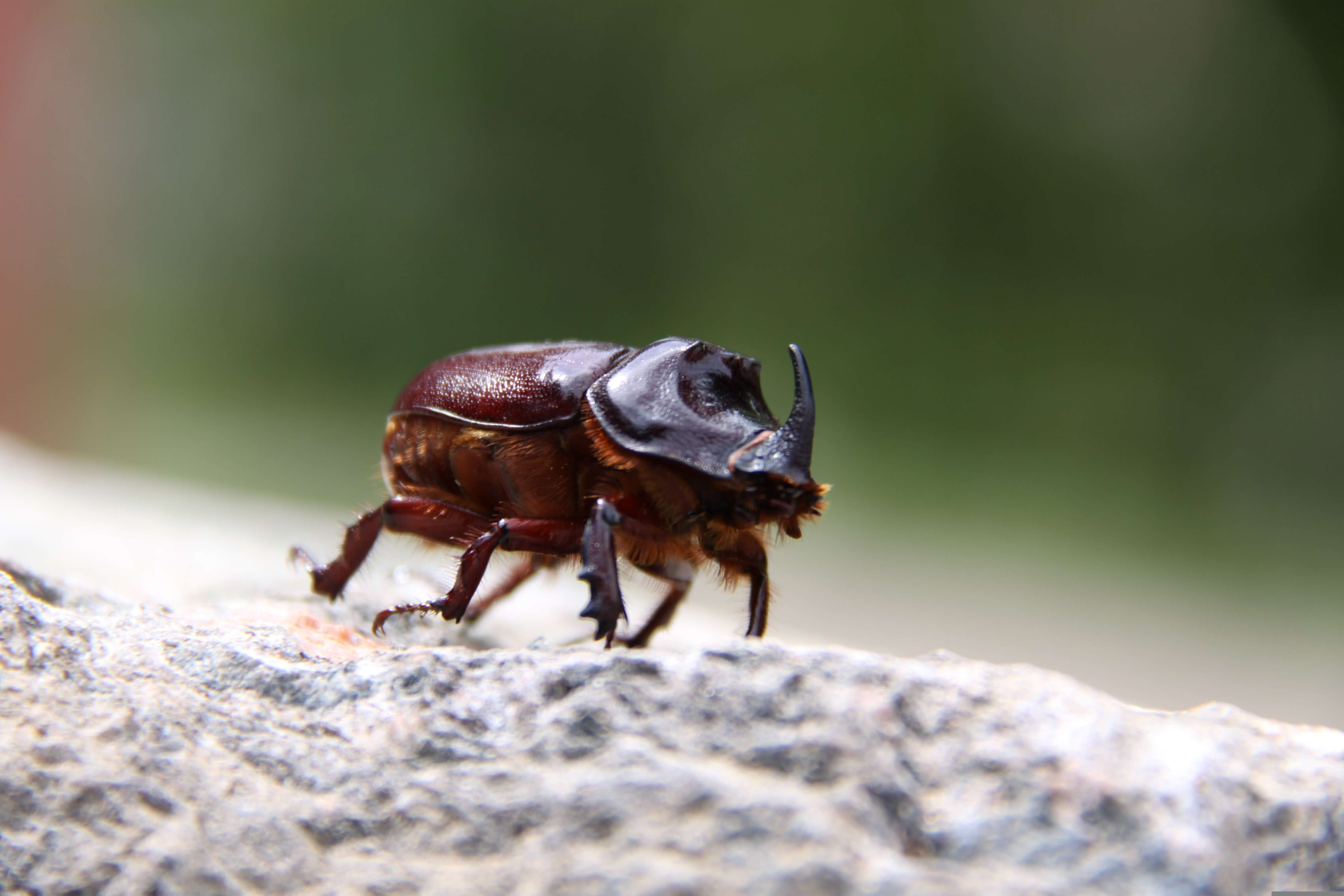
The armored gladiator champion of the insect world.
The final member of the Small 5 is truly one of the most spectacular insects in Africa. The Rhino Beetle takes its name from the massive, projecting horns found on the heads and thoraxes of the males—a direct structural mimic to the prehistoric facial horns of a true rhinoceros.
These huge beetles look like terrifying, armored medieval knights, but they are completely harmless to humans. They cannot bite or sting. The massive horns have only one biological purpose: gladiator combat. During the mating season, rival males will engage in brutal, grappling fights, using their horns to pry under the belly of their opponent and physically flip them over onto their backs or throw them entirely off a branch to win access to a female.
To support this combat style, rhino beetles have evolved into biological lifting powerhouses. Pound for pound, they are among the strongest animals on the planet. Some species are capable of lifting up to 850 times their own body weight—the equivalent of a human lifting a heavily loaded semi-truck over their head.
Despite their fearsome appearance and insane strength, adult rhino beetles live very short lives and feed mostly on soft, rotting fruit, sap, and nectar.
Best Places to Find Them in Kruger: Rhino beetles are strictly nocturnal and drawn to bright lights.
- Finding one requires hanging around the ablution blocks, reception areas, and restaurant patios in the rest camps after darkness falls.
- Because of their massive size and heavy armor, they are incredibly clumsy flyers. You will often hear a loud, heavy, droning buzz before hearing a significant "thud" as a beetle crashes face-first into a brightly lit wall or screen door. Look for them crawling confused on the walkways beneath camp lights.
Conclusion: The Joy of the Micro-Safari
Hunting for the Small 5 is the perfect antidote to "safari fatigue." When the midday heat drives the lions and leopards deep into the shade, making the bush seem completely empty from your vehicle, shifting your focus to the micro-world brings the park roaring back to life.
The next time you visit Kruger, remember to look down. Whether it’s watching an ant lion ruthlessly flicking sand at its prey, marveling at the architecture of a buffalo weaver colony, or laughing at a clumsy rhino beetle crashing into a camp light, the Small 5 prove that the most astonishing wildlife drama doesn't always require a roar.